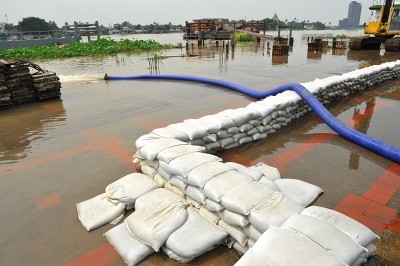
The London Olympics next year is very high in the public conscious and will continue to be so. The increase in traffic and the number of people using many services including public transport means that those businesses in central London are already gearing up for potential disruption and putting plans in place to reduce the impact of the event. This is certainly a good move for companies in the middle of town but what about the rest of us? If you don't have a significant central London presence then you're probably not too concerned. However, here are some other factors to consider:
Geography: other sites and transport links
It's probably fair to say that central London is going to be worst affected in terms of traffic but there are a number of locations outside of the M25 which will also be holding events. Consideration needs to be given to where spectators will be travelling from and by what means. Spectators from other countries may not spend their entire time at the games, so tourist areas around the country, particularly in the South East will see an increase in visitors. If you're doing business in areas of interest to tourists in general, have you considered the potential impact?
Timeline: when does your plan start and end?
What timeframe do you use when planning for any disruption? Do you start and end at the opening and closing ceremonies or consider inclusion of related events such as the Olympic torch relay and the Paralympics? From the torch relay arriving in the UK on 18th May to the closing ceremony of the Paralympics on 9th September is over 100 days. If you've only planned for three weeks then maybe it's time to rethink?
Suppliers and Customers: secondary and tertiary elements
Your business may not be based in central London or even have a significant presence in and around the capital. What about your suppliers and other third parties on which you rely? Having dealt with the primary consideration of your own business, you then need to consider the secondary impact of your suppliers not being able to fulfil their obligations to you. I've discussed previously about the issues of companies relying on trains and the tube to get their staff into work. These are third parties over which you have no control and no agreed levels of service. It is important to make sure therefore, that those third parties with which you do hold such contracts have considered how they are going the continue to provide the required levels of service throughout the games. The tertiary elements are the suppliers to your suppliers. For key third-parties, it's one thing to have them guarantee a level of service to you but can you be sure that they have undergone the same level of due diligence for their suppliers? The secondary consideration is ensuring your suppliers can still provide services to you, the tertiary consideration is ensuring that they are also considering the same risks to their businesses.
Your customers are the other group with whom you have contracts and to whom you have committed an agreed level of service. As well as making appropriate plans during 2012 for your own benefit, customers will want to see that you are also considering the continued provision of service to them. Where that service relies on infrastructure that will be under increasing demand and pressure during the Olympics, the basis of this requirement is well-founded.
Staff attendance: has everyone got tickets?
How many of your employees successfully obtained tickets for an Olympic event? How many have tickets for the same event? You may not get an idea until the opportunity to book time-off for 2012 comes around, but even then you will have people who wait until closer to the time to book their holiday even though they've had their tickets booked and the dates known for over a year.
Minimum notification periods, the ability of management to reject holiday requests and the threat of disciplinary action for taking time off without approval may not seem as important to some individuals as the seemingly once in a lifetime opportunity to be at the London Olympics. You may know how many staff have requested leave on a particular day but how can you be sure until the day arrives and people turn up (or not)? Being ready for staff shortages during key events is important. You may feel comfortable in the knowledge you can discipline or even dismiss those who deliberately do not turn up for critical duties, but that doesn't help you on the day.
Other events in 2012
The olympics, in isolation, is going to be disruptive enough but don't forget all the regular and special events that happen throughout London that might just add an additional level of complexity and concern to an already busy summer. The Queen's Diamond Jubilee earns us an extra bank holiday in June and will include a number of events around the capital and Wimbledon attracts plenty of crowds and will do the same again across June and July. The Notting Hill carnival promises to once again be bigger and better in 2012 than previous years and there are plenty of festivals and other events across the capital which will help contribute to the mayhem.
Now is the time to act!
Don't leave it until the last minute to prepare yourself for next summer. Act now to make sure you're ready for possible disruptions:
- Think about which of your suppliers may be affected by disruptions
- Consider which critical suppliers you want to approach to discuss their plans to deal with how any disruptions may affect their supply chain.
- Consider how disruptions in London may affect your customers
- Find out who in your company is planning to take time off, well in advance.
- Consider the timeframe you want to plan for. How does this match up to critical times in your own business processes?
Photo: xedos4
Welcome to the outpourings of my brain on the topic of Information Security, the basis of my career since 2000. A lot has changed in that time, new risks and threats are now present and information security is now increasingly in the conscious of not just business leaders but the general public.
Thursday, 20 October 2011
Thursday, 13 October 2011
Do I trust you with my most precious asset?
Getting security into the mindset of others and helping them to appreciate the benefits that security provides from the outset can be difficult. As you may already have seen, I do like to use analogies to put security into the context of a subject that others are familiar with. For service providers and outsourcers, a useful example is to look at potential customers as parents who are choosing a school for their child. Having been through this process recently myself, I've been able to draw some useful comparisons to with similar examples in business.
For parents choosing a school for their child, particularly the first school for their first child, this can be quite a daunting experience. Your child is your most valuable asset and for the most part you have been their primary influence, been responsible for defining every facet of their existence and for making every choice in their life. You have had complete visibility of everything they do and how each experience has made them the person they are today. The time has come however to entrust part of that responsibility to someone else, someone you don't know and of whom you have little visibility of how well they will continue the work that you have started. You can read reports from Ofsted (the schools inspector) who will define how well the school is performing against others in the area, you can look back into the history of the school and its performance and the exam results it has produced. You may speak to parents of children already in the school to see what they think of it or perhaps listen to rumours and stories in the local conscious about the school.
There is certainly a lot of information about to help parents make a judgement on a school for their child but the key element for many is the point when they get to visit the school and meet the head teacher. Until this point, the information gleaned has either been based on empirical results or second hand information from others. Seeing the environment for yourself and meeting the head teacher and most likely other members of staff will be the first opportunity to form your own opinions and ask your own questions. For many, this may be the differentiator and may be the biggest factor in how you make your decision. The figures will show how good the results are, but parents still want to know how their child will be engaged with and treated during their time at the school and will also want to know that they will be protected from harm and any risks that their children may face during their time there. Parents also have varying preferences for reporting and information. Some will be happy to entrust their child to the school with complete faith and rely only on report cards and parent-teacher meetings to get feedback. Other parents will want to know the minutiae of how each lesson is taught. Much of the assurance parents are going to get from this meeting is their confidence in the school and the staff to keep their child safe and secure in an environment outside of their control. Only if information provided in these meetings is to the satisfaction of the parents will they make the decision to entrust their child to the school.
This is very similar to businesses outsourcing elements of their IT or moving to a managed service. At a time when many companies are feeling the pinch from the economic downturn they may be turning to outsourcing to save costs and for many this may either be their first time or be the most significant move to entrust their data to another organisation. Without anywhere near as much information and visibility of prospective providers as they have of their own company, they will seek to gain as much information and assurance as possible. Analysis of the providers' performance and capabilities will give potential customers a good baseline on a shortlist. The really valuable information to differentiate a service provider from its competitors will come from the detailed and specific information that is exchanged throughout the bid process. Assurances that the supplier can deliver the required solution to the required standards will be a key measure, along with the cost effectiveness of the work. Customers also want assurances which may not be as easily set in stone as the technical design and cost. Making sure that their data is available when they need it will be defined within SLAs and recovery objectives but how can they be sure that the measures that make their information so highly available to them and their customers won't make it available to any unauthorised parties?
Security assurance can often be given in terms of certifications or accreditations held and the results of audits conducted. A visit to a service provider's facility will give customers peace of mind that the physical security controls are sufficient to protect their data, as well as the required environmental and power resilience controls. Customers will bring their own security people to talk to the service provider, and whilst the IT people are discussing how many megabits-per-second they need to transmit their data, gigabytes of RAM to process it and terabytes of disk space to store it, the security people will want to make sure that the data is being transmitted, processed and stored in an appropriate manner with controls that suitably mitigate the risk. The security people need to give assurances to their business that the data they entrust to the service provider is safe and properly protected from threats. This can be a make-or-break factor in any deal and will often require more than just assurances of compliance with any mandated regulatory standards. The security person that the service provider includes in that meeting needs to be able to give the customer the assurances they need that their data will be in safe hands and will be treated with the same care and consideration as if they had maintained it in-house.
Security built into a solution from the start is therefore more than just a technical solution consideration but requires a full risk-focussed assurance role to give potential customers the confidence they need that not only their service but their data will be safe in the service provider's hands.
Photo: Arvind Balaraman
For parents choosing a school for their child, particularly the first school for their first child, this can be quite a daunting experience. Your child is your most valuable asset and for the most part you have been their primary influence, been responsible for defining every facet of their existence and for making every choice in their life. You have had complete visibility of everything they do and how each experience has made them the person they are today. The time has come however to entrust part of that responsibility to someone else, someone you don't know and of whom you have little visibility of how well they will continue the work that you have started. You can read reports from Ofsted (the schools inspector) who will define how well the school is performing against others in the area, you can look back into the history of the school and its performance and the exam results it has produced. You may speak to parents of children already in the school to see what they think of it or perhaps listen to rumours and stories in the local conscious about the school.
There is certainly a lot of information about to help parents make a judgement on a school for their child but the key element for many is the point when they get to visit the school and meet the head teacher. Until this point, the information gleaned has either been based on empirical results or second hand information from others. Seeing the environment for yourself and meeting the head teacher and most likely other members of staff will be the first opportunity to form your own opinions and ask your own questions. For many, this may be the differentiator and may be the biggest factor in how you make your decision. The figures will show how good the results are, but parents still want to know how their child will be engaged with and treated during their time at the school and will also want to know that they will be protected from harm and any risks that their children may face during their time there. Parents also have varying preferences for reporting and information. Some will be happy to entrust their child to the school with complete faith and rely only on report cards and parent-teacher meetings to get feedback. Other parents will want to know the minutiae of how each lesson is taught. Much of the assurance parents are going to get from this meeting is their confidence in the school and the staff to keep their child safe and secure in an environment outside of their control. Only if information provided in these meetings is to the satisfaction of the parents will they make the decision to entrust their child to the school.
This is very similar to businesses outsourcing elements of their IT or moving to a managed service. At a time when many companies are feeling the pinch from the economic downturn they may be turning to outsourcing to save costs and for many this may either be their first time or be the most significant move to entrust their data to another organisation. Without anywhere near as much information and visibility of prospective providers as they have of their own company, they will seek to gain as much information and assurance as possible. Analysis of the providers' performance and capabilities will give potential customers a good baseline on a shortlist. The really valuable information to differentiate a service provider from its competitors will come from the detailed and specific information that is exchanged throughout the bid process. Assurances that the supplier can deliver the required solution to the required standards will be a key measure, along with the cost effectiveness of the work. Customers also want assurances which may not be as easily set in stone as the technical design and cost. Making sure that their data is available when they need it will be defined within SLAs and recovery objectives but how can they be sure that the measures that make their information so highly available to them and their customers won't make it available to any unauthorised parties?
Security assurance can often be given in terms of certifications or accreditations held and the results of audits conducted. A visit to a service provider's facility will give customers peace of mind that the physical security controls are sufficient to protect their data, as well as the required environmental and power resilience controls. Customers will bring their own security people to talk to the service provider, and whilst the IT people are discussing how many megabits-per-second they need to transmit their data, gigabytes of RAM to process it and terabytes of disk space to store it, the security people will want to make sure that the data is being transmitted, processed and stored in an appropriate manner with controls that suitably mitigate the risk. The security people need to give assurances to their business that the data they entrust to the service provider is safe and properly protected from threats. This can be a make-or-break factor in any deal and will often require more than just assurances of compliance with any mandated regulatory standards. The security person that the service provider includes in that meeting needs to be able to give the customer the assurances they need that their data will be in safe hands and will be treated with the same care and consideration as if they had maintained it in-house.
Security built into a solution from the start is therefore more than just a technical solution consideration but requires a full risk-focussed assurance role to give potential customers the confidence they need that not only their service but their data will be safe in the service provider's hands.
Photo: Arvind Balaraman
Labels:
accreditation,
assurance,
audit,
certifications,
outsourcing,
risk,
standards,
threats
Thursday, 6 October 2011
Availability: More than technical resilience
It's easy to let the definition of information security controls become biased in terms of just the IT and not the data or wider assets. The IT, although an asset in itself, is very much a supporting tool to store, process and transmit the data assets. This includes your data and your customers' data and should be classified according to it's value and the impact of loss, unauthorised access or change. Data will include general company confidential data, intellectual property, personally identifiable information or data which if exposed may harm the competitive advantages of the business. Confidentiality is always a key concern for data and availability is typically left to the technical resilience of the IT systems in which the data is contained.
It's only when you look at assets other than the data and consider how to protect those and how they interact with the data that you need to think about more than IT. Other assets include people (staff & contractors), buildings, supporting services/utilities and the reputation of the company. Reputation is always a difficult one when you need to quantify the level of impact of any event, but you can certainly think about the type of events you want to mitigate against to keep customers happy and ensure potential customers want to do business with you. How you deal with the risks against other assets will in turn help to protect this one.
Having systems backed up or having a failover system is all well and good but how do people access that data if their normal routine is disrupted or if they cannot physically access the location where they normally connect to the systems and are not aware of alternative options.
IT failings are only an element of business continuity events. Common causes include business locations being inaccessible or staff journeys being impacted, predominantly for reasons outside of the control of the organisation, such as bad weather. Whenever it snows in the UK, the country tends to grind to a halt, either through inaccessible transport routes or through staff not wanting to risk travelling or not knowing how to handle the conditions properly. Every time we get more than an inch of snow lots of people will ask why we weren't more prepared and why we didn't learn from last time. Someone will typically relay a story about how the last time they flew to Calgary (or similar location) there were fleets of snow ploughs constantly clearing runways and ask why don't we have the same at Heathrow? For most observers, the answer is obvious, Heathrow only gets disrupted a handful of times a year by snow and typically recovers quickly. Calgary however is somewhere people go because they have so much snow and therefore they are far more likely to invest in controls and infrastructure to keep planes landing in all conditions. Where snow is something of an irregular irritation for Heathrow it is an indication of the prime business environment for Calgary, so well worth the investment in the fleet of Ploughs (plus sweepers, blowers and melters).
Industrial action is another continuity consideration. We hear how a day of strikes have caused "so-many-millions of pounds of lost business", well this shouldn't need to be the case. If the only way for staff at a company to continue working is to jump on a train or tube and go to a specific building then that's a significant requirement you are putting onto another organisation with which you have no contracted service levels. If a strike takes out this one and only access mechanism and the only backup options are full to capacity from other companies' staff impacted by the same event, then you leave yourself unprepared.
A Business Impact Analysis (BIA) of all elements of the business will help assess each activity and how the loss of it for different periods of time might impact the business as a whole. Typically the technical roles within the company will know what they need to do if the requirement comes to connect remotely and more often do this on a regular basis. It's the functions that are often considered to be back-office that are perhaps less ready for a continuity event. Functions like procurement, billing and payroll are traditionally office-based activities, working from desktop PCs with data maintained locally. Although a BIA might indicate a minimum disruption to the business if these functions were not able to work for a day, the requirements for a company to buy goods and services, bill their customers and pay their staff become more critical for longer more protracted outages. Suddenly, without these functions, other measures that organisations have in place for resilience can be affected. Automation and remote management capabilities for these functions are all well and good but if they are only going to be used in an emergency, how do you make sure that the people in question know what to do and when?
Exercising in Business Continuity is just as important as any other availability control. There's no point in implementing continuity measures if nobody knows that they are there or what they need to do with them. Any business will hope that it never needs to use its continuity measures and the chances are that any event may happen long after the measures are implemented. Keeping the measures up-to-date and making sure they technically work is one part of testing. Exercising the people is another. These tests should be defined as part of a wider crisis management plan to test against multiple scenarios.
In conclusion, technical resilience is only a small part of ensuring the availability of services and data. An understanding of the criticality of each business area and the impact the loss of any of them for varying periods of time should be understood. Once controls are implemented to reduce the risk or impact of different events, both the controls themselves and the people required to operate them in the event that they are required.
Photo: think4photop
It's only when you look at assets other than the data and consider how to protect those and how they interact with the data that you need to think about more than IT. Other assets include people (staff & contractors), buildings, supporting services/utilities and the reputation of the company. Reputation is always a difficult one when you need to quantify the level of impact of any event, but you can certainly think about the type of events you want to mitigate against to keep customers happy and ensure potential customers want to do business with you. How you deal with the risks against other assets will in turn help to protect this one.
Having systems backed up or having a failover system is all well and good but how do people access that data if their normal routine is disrupted or if they cannot physically access the location where they normally connect to the systems and are not aware of alternative options.
IT failings are only an element of business continuity events. Common causes include business locations being inaccessible or staff journeys being impacted, predominantly for reasons outside of the control of the organisation, such as bad weather. Whenever it snows in the UK, the country tends to grind to a halt, either through inaccessible transport routes or through staff not wanting to risk travelling or not knowing how to handle the conditions properly. Every time we get more than an inch of snow lots of people will ask why we weren't more prepared and why we didn't learn from last time. Someone will typically relay a story about how the last time they flew to Calgary (or similar location) there were fleets of snow ploughs constantly clearing runways and ask why don't we have the same at Heathrow? For most observers, the answer is obvious, Heathrow only gets disrupted a handful of times a year by snow and typically recovers quickly. Calgary however is somewhere people go because they have so much snow and therefore they are far more likely to invest in controls and infrastructure to keep planes landing in all conditions. Where snow is something of an irregular irritation for Heathrow it is an indication of the prime business environment for Calgary, so well worth the investment in the fleet of Ploughs (plus sweepers, blowers and melters).
Industrial action is another continuity consideration. We hear how a day of strikes have caused "so-many-millions of pounds of lost business", well this shouldn't need to be the case. If the only way for staff at a company to continue working is to jump on a train or tube and go to a specific building then that's a significant requirement you are putting onto another organisation with which you have no contracted service levels. If a strike takes out this one and only access mechanism and the only backup options are full to capacity from other companies' staff impacted by the same event, then you leave yourself unprepared.
A Business Impact Analysis (BIA) of all elements of the business will help assess each activity and how the loss of it for different periods of time might impact the business as a whole. Typically the technical roles within the company will know what they need to do if the requirement comes to connect remotely and more often do this on a regular basis. It's the functions that are often considered to be back-office that are perhaps less ready for a continuity event. Functions like procurement, billing and payroll are traditionally office-based activities, working from desktop PCs with data maintained locally. Although a BIA might indicate a minimum disruption to the business if these functions were not able to work for a day, the requirements for a company to buy goods and services, bill their customers and pay their staff become more critical for longer more protracted outages. Suddenly, without these functions, other measures that organisations have in place for resilience can be affected. Automation and remote management capabilities for these functions are all well and good but if they are only going to be used in an emergency, how do you make sure that the people in question know what to do and when?
Exercising in Business Continuity is just as important as any other availability control. There's no point in implementing continuity measures if nobody knows that they are there or what they need to do with them. Any business will hope that it never needs to use its continuity measures and the chances are that any event may happen long after the measures are implemented. Keeping the measures up-to-date and making sure they technically work is one part of testing. Exercising the people is another. These tests should be defined as part of a wider crisis management plan to test against multiple scenarios.
In conclusion, technical resilience is only a small part of ensuring the availability of services and data. An understanding of the criticality of each business area and the impact the loss of any of them for varying periods of time should be understood. Once controls are implemented to reduce the risk or impact of different events, both the controls themselves and the people required to operate them in the event that they are required.
Photo: think4photop
Thursday, 29 September 2011
The "Hollywood baddies" approach to security awareness
Training and education for staff who have security responsibilities as a key part of their role should be a standard approach, and given that the people in question are properly qualified to perform their role, they should either be reasonably conversant with their security requirements or certainly understand why they are needed. Security awareness training for staff who feel that security is not a key part of their role is always going to be a challenge. Security professionals will tell staff that security is everyone's responsibility, regardless of their role in the same way that a sales director will tell everyone that they are in the sales team.
Anyone in an organisation that allows physical or logical access to company assets or data that are not already publicly available has a responsibility to protect those assets. If you have access to email, intranet sites, printed material, verbally-communicated information or physical access to a site using an ID card, pin code, physical key or simply authorisation to use a door marked in a way to restrict access, then you need to know what security controls are in place and why. Only through an understanding of the risks that the organisation is trying to mitigate with the controls in place can staff really understand what their security responsibilities are.
Security is a dry subject at the best of times. I fact, well done for making it this far in this post. Staff need to be aware of where they can access and read security policies, how they should respond to requests for information from different parties and how to identify and report security incidents. Putting all this in a PowerPoint presentation with a load of links and technical information probably isn't going to help it sink in.
A good mechanism is to put the staff in the mindset that they have in their everyday lives outside of work and help them to apply these controls in work. Everyone considers information security on a daily basis, whether they know it or not. Everyone has their own assets they need to protect such as their home and contents, perhaps a motor vehicle, the contents of their pockets or bag, including wallet/purse, mobile phone, etc. Everyone has their own controls in place to protect this assets, from simply being careful not to flash money or expensive phones around in public to locking their home or car, or any further security measures such as an alarm. People automatically understand why they have these controls, they do a little risk assessment in their mind to work out the probability and impact of unauthorised access to or loss ofthese assets and apply appropriate controls. Security awareness training that encourages staff to bring this attitude into the workplace is a good first step.
Using case studies is another good mechanism to put information security into context and there are certainly plenty of horror stories out in the public domain of where poor information security has led to a data loss. Talking about a company that lost thousands of credit card details or a government department exposing millions of taxpayers' personal details are good examples of "these are things we don't want to happen in this company" but very quickly you might lose your audience, as they don't necessarily see the detail of the chain of mistakes made to lead to the exposure, and cannot subsequently apply it to their own role. You are probably guaranteed however, that all your staff watch movies and will be familiar with thie plots of the more well-known ones. This is where I call on my "Hollywood baddies" Infosec awareness training.
Basic movie plot: bad guys want to do something bad, good guys need to stop them, bad guys initially seem unstoppable, good guys find a way to break the bad guys plans, bad guys lose/die, good guys save the day/town/country/planet/universe, roll credits. It might seem formulaic, but it's only plot detail and dialogue that will subsequently set one movie apart from another (or just special effects in some cases). In many cases, the way that the good guys find to break the bad guys is by exploiting weaknesses in their information security, not always at the technological level, quite often in the area of security policy not meeting best practice or failures in process controls. It seems that any bad guys implementing best practice information security would be able to have completed their dastardly plans and successfully defeated any attempts by the good guys to stop them.
I find that the best examples are to use films that are well known in the public conscious, which almost all will have seen or at least know the outline of the plot. Box office blockbusters from a few years ago that have been out on DVD for a while and probably been on TV a few times are a good bet. Here are some examples:
[SPOILER ALERT... Just in case]
Jurassic Park: Rogue sys admin turns off multiple security and monitoring systems to steal dinosaur embryos and inadvertently releases live dinosaurs, causing havoc on the island. Malicious activity by insiders with access to critical assets is a typical risk, although more common issues arise from errors or ignorance rather than malice. In the case of people susceptible to coercion for financial benefit, a comprehensive pre-employment screening process helps to identify those who may be more agreeable to such an approach (and something which the owner of the park would surely want to do, given the nature of his business), but this is just the first step and in this case the character in question is well paid and is just greedy. The baddie in Jurassic Park was a single person in control of all IT systems and consequently there is no segregation of duties that might have prevented the extent of damage that was caused and a single person responsible for all administration represents too high level privileges for one person to hold and does not allow for job rotation or avoidance of single points of failure. Talking of single points of failure, the resilience and recovery solutions in place were not sufficient for the risks in place. Even if the bad guy got away with it, the impact of the incident could have been reduced significantly.
The Matrix: Computers enslave the human race, keeping them in an unconscious state to generate power from their biological energy whilst keeping their minds occupied with a virtual world (the matrix) that makes them believe they are really free and living in the real world. Our heroes manage to unplug themselves from the power system and plug themselves into the matrix in an attempt to free the human race. Quite often, characters in the film state that certain IT devices or mechanisms were "built for just one purpose", so clearly the machines don't think much of cloud solutions or Infrastructure-as-a-service? The main security controls missing are a thoroughly implemented access control, authentication and authorisation systems. The good guys manage to plug into the matrix from anywhere. Intrusion detection/prevention seems to have taken a dive too, as it takes the agents, the enforcement mechanisms of the matrix, a good while to locate and then attempt to remove the intruders. The good guys also have telephones dotted around the matrix that allow them to communicate back to their control point, or as I like to call them, Trojans. Clearly, malware protection isn't considered important in the future. A bit more thought to security and those machines could be happily recharging themselves from the human race indefinitely.
There are many more examples. Don't get me started on the bit in I Robot where they can get into the bad guy's HQ through the maintenance ducts which have unprotected entrances on the street, no monitoring or surveillance and lead directly to the critical areas of the building. What is this? The 1960s Mission Impossible TV Series principle of gaining access to any secure installation by turning up in a set of overalls and claiming to be coming to fix the air conditioning?
My personal favourite for a Hollywood Baddies infosec case study for security awareness is Independence Day. The aliens had a great plan to take over the Earth, had the element of surprise over us unsuspecting humans and certainly had more advanced technology to help them than we had. But once again, it's poor infosec that is their downfall. The reason I like this one so much is that it covers a multitude of infosec areas. I frame the plot as a company (the humans) who perform a piece of business (living on the Earth). The contract comes up for renewal and a competitor (the aliens) want to oust the incumbent supplier (kill the humans) and take over the business.
1. Firstly, the aliens make it all the way from their previous world to our moon and set off a powerful signal, clearly announcing their presence and taking the element of surprise away from their business plan. This data leakage gives the competition time to react and takes the edge off their competitive advantage.
2. The positioning of their ships above key global locations does not necessarily signal an intention to attack, they may simply want to say hello to all the world leaders at once? The combination of this with the signal being identified as a countdown to attack is enough for the good guys to take action. Using encryption in their transmissions would have masked this and not given the humans the heads-up. A serious breach of confidentiality there.
3. The authorities still aren't convinced though. However, the helicopter they send up to perform a close-encounters style light show gets blown out of the sky. This removes all doubt of the aliens' plans with still nearly half an hour to spare, giving our heroes plenty of time to escape. Whether this is a gunner with an itchy trigger-tentacle (escalation of privileges) or a ship commander who does not appreciate the need to keep their plans confidential (security integration into job roles), the intent of the aliens is now truly confirmed.
4. When the heroes get to Area 51, they discover that the Roswell UFO legend is actually a craft belonging to one of these aliens, clearly on some sort of data-gathering mission in the 1950s. Since the aliens came back, the ship has fired up and is fully functional. This raises a lot of questions around how the aliens perform asset management, client authentication, leavers process and a number of other security principles which should have rendered the craft inoperable once it had been lost. Clearly, there hadn't been any sort of process or asset audit in the last few decades that might have raised the issue of this lost craft.
5. When a live alien rears it's ugly head, it starts shooting it's mouth off (or brain, to be more accurate) about who they are, what they are doing and what their plans are for Earth. They say that loose talk costs lives and in this case the information imparted is enough for the president to make the decision to increase the force used against the invading force. Clearly the aliens don't operate their own security awareness training to cover the importance of not disclosing confidential information in public. What ever happened to "name, rank and serial number"?
6. Physical security clearly isn't a big concern of the aliens. Our heroes are able to fly the now operational craft straight in through the front door of the mothership unchallenged, with a large nuclear explosive device attached, and successfully dock right in front of the control room. That's like someone walking into your building without any ID, carrying a machine gun in plain view and sitting down next to the IT admins without anyone blinking an eye.
7. What are the chances of the aliens' IT systems and communication interfaces being completely compatible with those used on Earth? Fortunately, this was the case and our heroes are able to successfully infect the systems that run the ships' forcefields with a virus. No Anti-malware and most likely a poor vulnerability management process and patching regime are clearly to blame here, not to mention a clear lack of protection of critical systems from the user domain. Defence in depth clearly another thing that didn't catch on with these baddies.
8. Finally, flying a plane into the main weapon of the spaceship not only destroys the weapon but the rest of the ship. Surely this would have come up as an issue during development and testing? A risk assessment should have pointed out that the shields alone are perhaps not a sufficient mitigating control as this ultimately leads to the defeat and destruction of the invading fleet.
There are I'm sure many more examples, but these are the key ones that I focus on as they cover a significant number of areas at a high level. As nice as it would be to spend an awareness session talking just about Independence Day, this is used just to frame the thoughts of the audience and put it into context with a familiar situation. These principles then need to be applied to the organisation and the required controls applied across the business - with references back to how not applying or breaching these controls turned out bad for the aliens.
Hollywood films are just one familiar scenario that can be used to get the point across but I've found it a useful tool for justifying security controls to non-security people, I have been told that it was a very memorable session and I even find people recommending my security awareness presentation to others, which surely can't be a bad thing.
Photo: Porbital

Anyone in an organisation that allows physical or logical access to company assets or data that are not already publicly available has a responsibility to protect those assets. If you have access to email, intranet sites, printed material, verbally-communicated information or physical access to a site using an ID card, pin code, physical key or simply authorisation to use a door marked in a way to restrict access, then you need to know what security controls are in place and why. Only through an understanding of the risks that the organisation is trying to mitigate with the controls in place can staff really understand what their security responsibilities are.
Security is a dry subject at the best of times. I fact, well done for making it this far in this post. Staff need to be aware of where they can access and read security policies, how they should respond to requests for information from different parties and how to identify and report security incidents. Putting all this in a PowerPoint presentation with a load of links and technical information probably isn't going to help it sink in.
A good mechanism is to put the staff in the mindset that they have in their everyday lives outside of work and help them to apply these controls in work. Everyone considers information security on a daily basis, whether they know it or not. Everyone has their own assets they need to protect such as their home and contents, perhaps a motor vehicle, the contents of their pockets or bag, including wallet/purse, mobile phone, etc. Everyone has their own controls in place to protect this assets, from simply being careful not to flash money or expensive phones around in public to locking their home or car, or any further security measures such as an alarm. People automatically understand why they have these controls, they do a little risk assessment in their mind to work out the probability and impact of unauthorised access to or loss ofthese assets and apply appropriate controls. Security awareness training that encourages staff to bring this attitude into the workplace is a good first step.
Using case studies is another good mechanism to put information security into context and there are certainly plenty of horror stories out in the public domain of where poor information security has led to a data loss. Talking about a company that lost thousands of credit card details or a government department exposing millions of taxpayers' personal details are good examples of "these are things we don't want to happen in this company" but very quickly you might lose your audience, as they don't necessarily see the detail of the chain of mistakes made to lead to the exposure, and cannot subsequently apply it to their own role. You are probably guaranteed however, that all your staff watch movies and will be familiar with thie plots of the more well-known ones. This is where I call on my "Hollywood baddies" Infosec awareness training.
Basic movie plot: bad guys want to do something bad, good guys need to stop them, bad guys initially seem unstoppable, good guys find a way to break the bad guys plans, bad guys lose/die, good guys save the day/town/country/planet/universe, roll credits. It might seem formulaic, but it's only plot detail and dialogue that will subsequently set one movie apart from another (or just special effects in some cases). In many cases, the way that the good guys find to break the bad guys is by exploiting weaknesses in their information security, not always at the technological level, quite often in the area of security policy not meeting best practice or failures in process controls. It seems that any bad guys implementing best practice information security would be able to have completed their dastardly plans and successfully defeated any attempts by the good guys to stop them.
I find that the best examples are to use films that are well known in the public conscious, which almost all will have seen or at least know the outline of the plot. Box office blockbusters from a few years ago that have been out on DVD for a while and probably been on TV a few times are a good bet. Here are some examples:
[SPOILER ALERT... Just in case]
Jurassic Park: Rogue sys admin turns off multiple security and monitoring systems to steal dinosaur embryos and inadvertently releases live dinosaurs, causing havoc on the island. Malicious activity by insiders with access to critical assets is a typical risk, although more common issues arise from errors or ignorance rather than malice. In the case of people susceptible to coercion for financial benefit, a comprehensive pre-employment screening process helps to identify those who may be more agreeable to such an approach (and something which the owner of the park would surely want to do, given the nature of his business), but this is just the first step and in this case the character in question is well paid and is just greedy. The baddie in Jurassic Park was a single person in control of all IT systems and consequently there is no segregation of duties that might have prevented the extent of damage that was caused and a single person responsible for all administration represents too high level privileges for one person to hold and does not allow for job rotation or avoidance of single points of failure. Talking of single points of failure, the resilience and recovery solutions in place were not sufficient for the risks in place. Even if the bad guy got away with it, the impact of the incident could have been reduced significantly.
The Matrix: Computers enslave the human race, keeping them in an unconscious state to generate power from their biological energy whilst keeping their minds occupied with a virtual world (the matrix) that makes them believe they are really free and living in the real world. Our heroes manage to unplug themselves from the power system and plug themselves into the matrix in an attempt to free the human race. Quite often, characters in the film state that certain IT devices or mechanisms were "built for just one purpose", so clearly the machines don't think much of cloud solutions or Infrastructure-as-a-service? The main security controls missing are a thoroughly implemented access control, authentication and authorisation systems. The good guys manage to plug into the matrix from anywhere. Intrusion detection/prevention seems to have taken a dive too, as it takes the agents, the enforcement mechanisms of the matrix, a good while to locate and then attempt to remove the intruders. The good guys also have telephones dotted around the matrix that allow them to communicate back to their control point, or as I like to call them, Trojans. Clearly, malware protection isn't considered important in the future. A bit more thought to security and those machines could be happily recharging themselves from the human race indefinitely.
There are many more examples. Don't get me started on the bit in I Robot where they can get into the bad guy's HQ through the maintenance ducts which have unprotected entrances on the street, no monitoring or surveillance and lead directly to the critical areas of the building. What is this? The 1960s Mission Impossible TV Series principle of gaining access to any secure installation by turning up in a set of overalls and claiming to be coming to fix the air conditioning?
My personal favourite for a Hollywood Baddies infosec case study for security awareness is Independence Day. The aliens had a great plan to take over the Earth, had the element of surprise over us unsuspecting humans and certainly had more advanced technology to help them than we had. But once again, it's poor infosec that is their downfall. The reason I like this one so much is that it covers a multitude of infosec areas. I frame the plot as a company (the humans) who perform a piece of business (living on the Earth). The contract comes up for renewal and a competitor (the aliens) want to oust the incumbent supplier (kill the humans) and take over the business.
1. Firstly, the aliens make it all the way from their previous world to our moon and set off a powerful signal, clearly announcing their presence and taking the element of surprise away from their business plan. This data leakage gives the competition time to react and takes the edge off their competitive advantage.
2. The positioning of their ships above key global locations does not necessarily signal an intention to attack, they may simply want to say hello to all the world leaders at once? The combination of this with the signal being identified as a countdown to attack is enough for the good guys to take action. Using encryption in their transmissions would have masked this and not given the humans the heads-up. A serious breach of confidentiality there.
3. The authorities still aren't convinced though. However, the helicopter they send up to perform a close-encounters style light show gets blown out of the sky. This removes all doubt of the aliens' plans with still nearly half an hour to spare, giving our heroes plenty of time to escape. Whether this is a gunner with an itchy trigger-tentacle (escalation of privileges) or a ship commander who does not appreciate the need to keep their plans confidential (security integration into job roles), the intent of the aliens is now truly confirmed.
4. When the heroes get to Area 51, they discover that the Roswell UFO legend is actually a craft belonging to one of these aliens, clearly on some sort of data-gathering mission in the 1950s. Since the aliens came back, the ship has fired up and is fully functional. This raises a lot of questions around how the aliens perform asset management, client authentication, leavers process and a number of other security principles which should have rendered the craft inoperable once it had been lost. Clearly, there hadn't been any sort of process or asset audit in the last few decades that might have raised the issue of this lost craft.
5. When a live alien rears it's ugly head, it starts shooting it's mouth off (or brain, to be more accurate) about who they are, what they are doing and what their plans are for Earth. They say that loose talk costs lives and in this case the information imparted is enough for the president to make the decision to increase the force used against the invading force. Clearly the aliens don't operate their own security awareness training to cover the importance of not disclosing confidential information in public. What ever happened to "name, rank and serial number"?
6. Physical security clearly isn't a big concern of the aliens. Our heroes are able to fly the now operational craft straight in through the front door of the mothership unchallenged, with a large nuclear explosive device attached, and successfully dock right in front of the control room. That's like someone walking into your building without any ID, carrying a machine gun in plain view and sitting down next to the IT admins without anyone blinking an eye.
7. What are the chances of the aliens' IT systems and communication interfaces being completely compatible with those used on Earth? Fortunately, this was the case and our heroes are able to successfully infect the systems that run the ships' forcefields with a virus. No Anti-malware and most likely a poor vulnerability management process and patching regime are clearly to blame here, not to mention a clear lack of protection of critical systems from the user domain. Defence in depth clearly another thing that didn't catch on with these baddies.
8. Finally, flying a plane into the main weapon of the spaceship not only destroys the weapon but the rest of the ship. Surely this would have come up as an issue during development and testing? A risk assessment should have pointed out that the shields alone are perhaps not a sufficient mitigating control as this ultimately leads to the defeat and destruction of the invading fleet.
There are I'm sure many more examples, but these are the key ones that I focus on as they cover a significant number of areas at a high level. As nice as it would be to spend an awareness session talking just about Independence Day, this is used just to frame the thoughts of the audience and put it into context with a familiar situation. These principles then need to be applied to the organisation and the required controls applied across the business - with references back to how not applying or breaching these controls turned out bad for the aliens.
Hollywood films are just one familiar scenario that can be used to get the point across but I've found it a useful tool for justifying security controls to non-security people, I have been told that it was a very memorable session and I even find people recommending my security awareness presentation to others, which surely can't be a bad thing.
Photo: Porbital
Friday, 23 September 2011
Information Security vs Formula One Safety
Security is often considered a cost to the business, an overhead that they just have to begrudgingly accept. The pot of gold for any CSO is that magical Security Return on Investment calculation which will justify why the investment needs to be made. Security is a lot like insurance - you need to make the investment now to protect you from an event or events that may happen in the future. The benefit comes from demonstrating how the investment you make now in the controls to remove or reduce the impact of such events is less than the cost of handling the event without those controls.
If we were able to accurately predict with significant certainty, what events were going to happen over the course of a year, how often they would occur and exactly what the cost to the business was going to be be, then security budgets would be both easy to calculate and easily justified. Sadly, there is a significant amount of uncertainty which can lead to an attitude of "we'll worry about it when it happens".
One of my favourite analogies is to consider security like the brakes on a car. A number of people use this example to demonstrate why security should be integrated into any solution from the beginning and why it should not simply be an optional extra tacked on at the end. It can also be used to address attitudes to security and the importance of a well-prepared and executed risk management and security plan to justify security investment. I like to take this example and expand it to compare security investment in business to safety investment in motor racing... In this case, motor racing and more specifically, Forumla One.
The immediate reaction is that the brakes on a car are the things that slow it down and bring it to a stop, which can be the perception of security from a business. However, the brakes are the elements that allow a car to travel fast as the driver knows that the brakes are there when they need them. How fast would a Formula One driver really want to go down the straight if they knew that there were no brakes available as the corner approaches? The brakes enable the car to go fast in the knowledge that when the driver needs to slow down for a corner or to avoid a hazard, that they can do so easily. Lap times are therefore far quicker with brakes than if they were to attempt a lap without them.
That doesn't of course mean that Formula One cars won't ever crash, we know that still happens. The brakes aren't the silver bullet to remove all problems and some might see Security as needing to be just this. The brakes help to ensure that in most circumstances in the event of an incident that the impact (in more than one sense of the word) is reduced and recovery is quicker. Brakes on the car are only one of the protection mechanisms in place. The design of the car, the drivers clothing and all the many monitoring capabilities that the team has to assure the heath of the car are all controls to protect the driver.
The driver is not the only asset that needs protecting, the team's reputation also needs to be considered. Who will want to drive for or sponsor a racing team if it's cars have a really bad safety record? This isn't just about winning races and beating competitors, it's about protecting assets. A key point to make here is that the justification of spend to reduce risk, needs to be assessed on all assets, including people and reputation, not just IT and data.
This analogy could go on for quite a while and become even more multi-faceted, but I'll reign it in here in an attempt to get to the point. Formula One teams spend a lot of money on safety to ensure that their drivers are protected, the money they spend is offset against the ability the car and driver have to drive fast and win a race, collecting prize money and more sponsorship deals. Knowing which safety measures to implement will be based on a risk assessment of the likelihood and impact of events that might impact their ability to win races. By analysing previous incidents, performance of their and other teams and by continually monitoring the state and health of their cars when racing, they can make smart investments, win races and increase revenue.
This is the same for any business. To be successful, they need to look at what what the assets are they need to protect, including data, information systems, infrastructure, buildings, people and the reputation of the organisation. They then need to ensure that they understand the threats to those assets, the probability of that threat causing an incident and the impact it will have to the business - any information on past incidents within their own company or to other companies will aid this assessment and should also be used ongoing to gauge the effectiveness of any implemented controls. The required security investment must be made to clearly meet the output of this assessment in the form of defined controls, technical or procedural, that will reduce the chance of an incident occurring, reduce the impact of an incident if it occurs and allow the business to recover as quickly as possible.
Any Formula One team that makes Safety an afterthought will have the same problems as any business that makes Security an afterthought.
Photo: Pete Keen
If we were able to accurately predict with significant certainty, what events were going to happen over the course of a year, how often they would occur and exactly what the cost to the business was going to be be, then security budgets would be both easy to calculate and easily justified. Sadly, there is a significant amount of uncertainty which can lead to an attitude of "we'll worry about it when it happens".
One of my favourite analogies is to consider security like the brakes on a car. A number of people use this example to demonstrate why security should be integrated into any solution from the beginning and why it should not simply be an optional extra tacked on at the end. It can also be used to address attitudes to security and the importance of a well-prepared and executed risk management and security plan to justify security investment. I like to take this example and expand it to compare security investment in business to safety investment in motor racing... In this case, motor racing and more specifically, Forumla One.
The immediate reaction is that the brakes on a car are the things that slow it down and bring it to a stop, which can be the perception of security from a business. However, the brakes are the elements that allow a car to travel fast as the driver knows that the brakes are there when they need them. How fast would a Formula One driver really want to go down the straight if they knew that there were no brakes available as the corner approaches? The brakes enable the car to go fast in the knowledge that when the driver needs to slow down for a corner or to avoid a hazard, that they can do so easily. Lap times are therefore far quicker with brakes than if they were to attempt a lap without them.
That doesn't of course mean that Formula One cars won't ever crash, we know that still happens. The brakes aren't the silver bullet to remove all problems and some might see Security as needing to be just this. The brakes help to ensure that in most circumstances in the event of an incident that the impact (in more than one sense of the word) is reduced and recovery is quicker. Brakes on the car are only one of the protection mechanisms in place. The design of the car, the drivers clothing and all the many monitoring capabilities that the team has to assure the heath of the car are all controls to protect the driver.
The driver is not the only asset that needs protecting, the team's reputation also needs to be considered. Who will want to drive for or sponsor a racing team if it's cars have a really bad safety record? This isn't just about winning races and beating competitors, it's about protecting assets. A key point to make here is that the justification of spend to reduce risk, needs to be assessed on all assets, including people and reputation, not just IT and data.
This analogy could go on for quite a while and become even more multi-faceted, but I'll reign it in here in an attempt to get to the point. Formula One teams spend a lot of money on safety to ensure that their drivers are protected, the money they spend is offset against the ability the car and driver have to drive fast and win a race, collecting prize money and more sponsorship deals. Knowing which safety measures to implement will be based on a risk assessment of the likelihood and impact of events that might impact their ability to win races. By analysing previous incidents, performance of their and other teams and by continually monitoring the state and health of their cars when racing, they can make smart investments, win races and increase revenue.
This is the same for any business. To be successful, they need to look at what what the assets are they need to protect, including data, information systems, infrastructure, buildings, people and the reputation of the organisation. They then need to ensure that they understand the threats to those assets, the probability of that threat causing an incident and the impact it will have to the business - any information on past incidents within their own company or to other companies will aid this assessment and should also be used ongoing to gauge the effectiveness of any implemented controls. The required security investment must be made to clearly meet the output of this assessment in the form of defined controls, technical or procedural, that will reduce the chance of an incident occurring, reduce the impact of an incident if it occurs and allow the business to recover as quickly as possible.
Any Formula One team that makes Safety an afterthought will have the same problems as any business that makes Security an afterthought.
Photo: Pete Keen
Subscribe to:
Posts (Atom)